An Icon for Everyone is a transformation project delivered by Rother District Council and De La Warr Pavilion to restore and reimagine the De La Warr Pavilion for the next century.
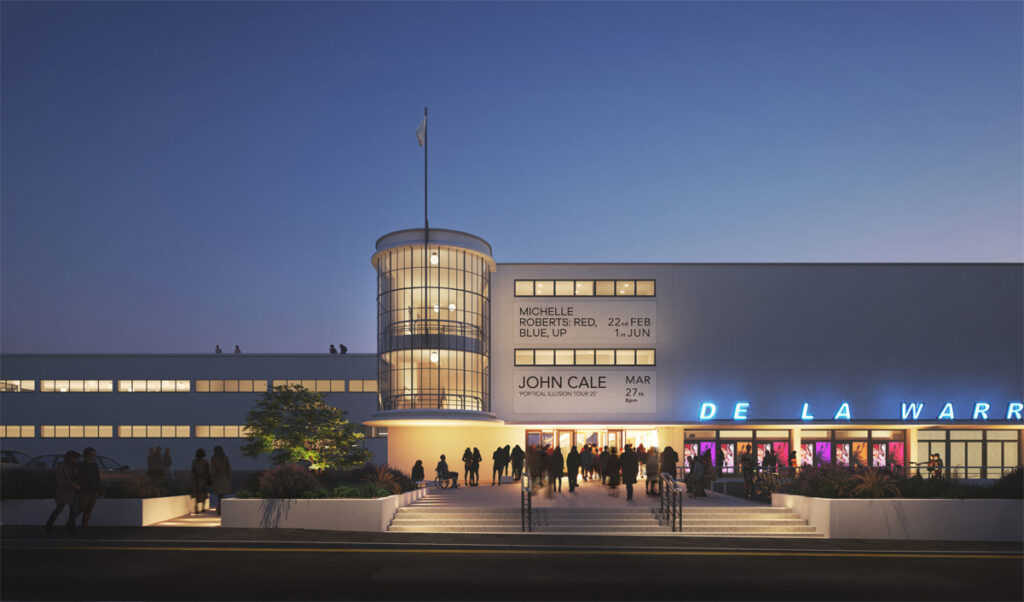
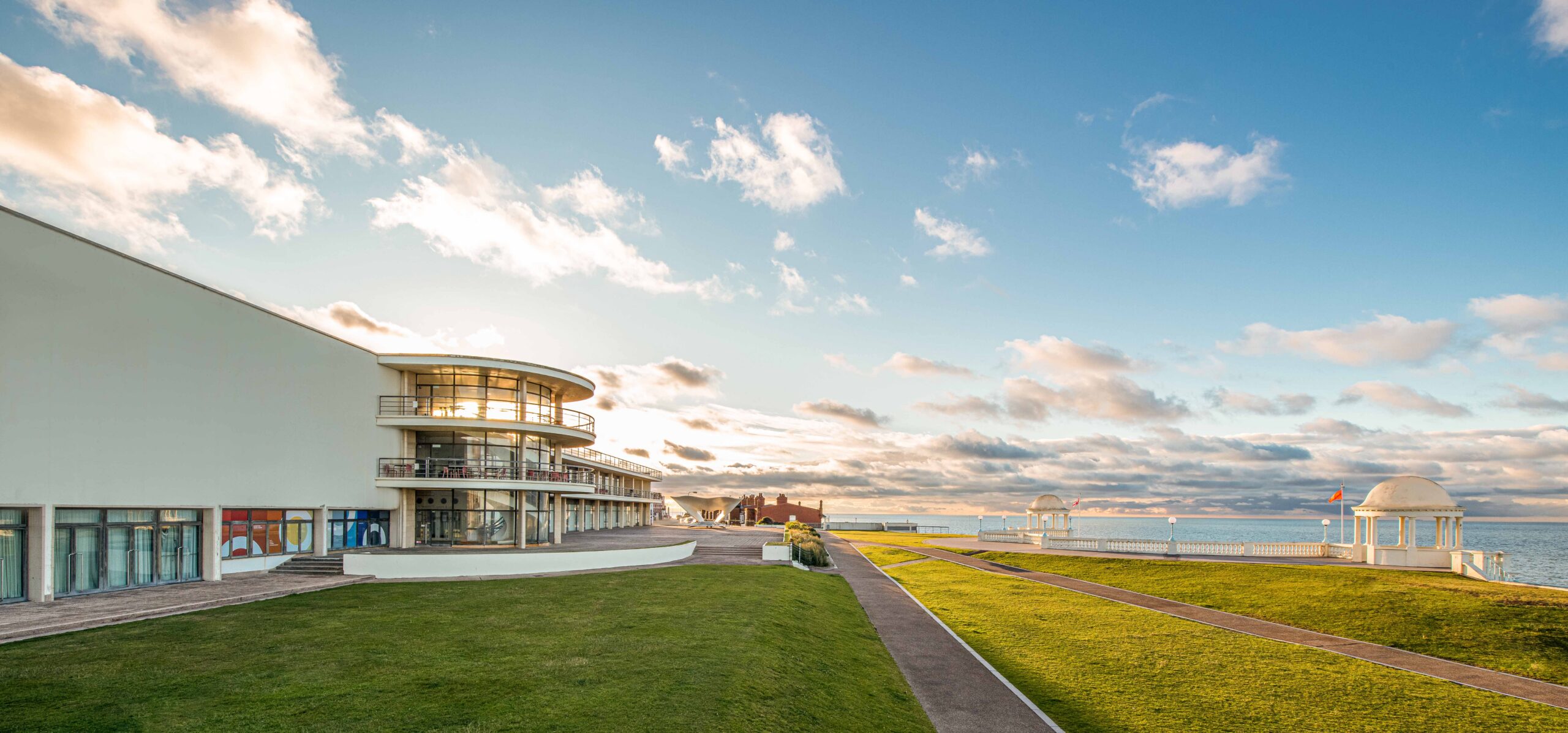
The Grade I listed Pavilion is one of Britain’s most iconic 1930s modernist buildings, born from ideals of innovation, culture, and equality. Commissioned by the 9th Earl De La Warr as Britain’s first arts centre and imagined as a “People’s Palace”, it was designed by pioneering architects Erich Mendelsohn, after his flight from Germany in 1933, and Serge Chermayeff, a Russian émigré. The Pavilion remains a symbol of creativity and social vision on the Bexhill seafront.
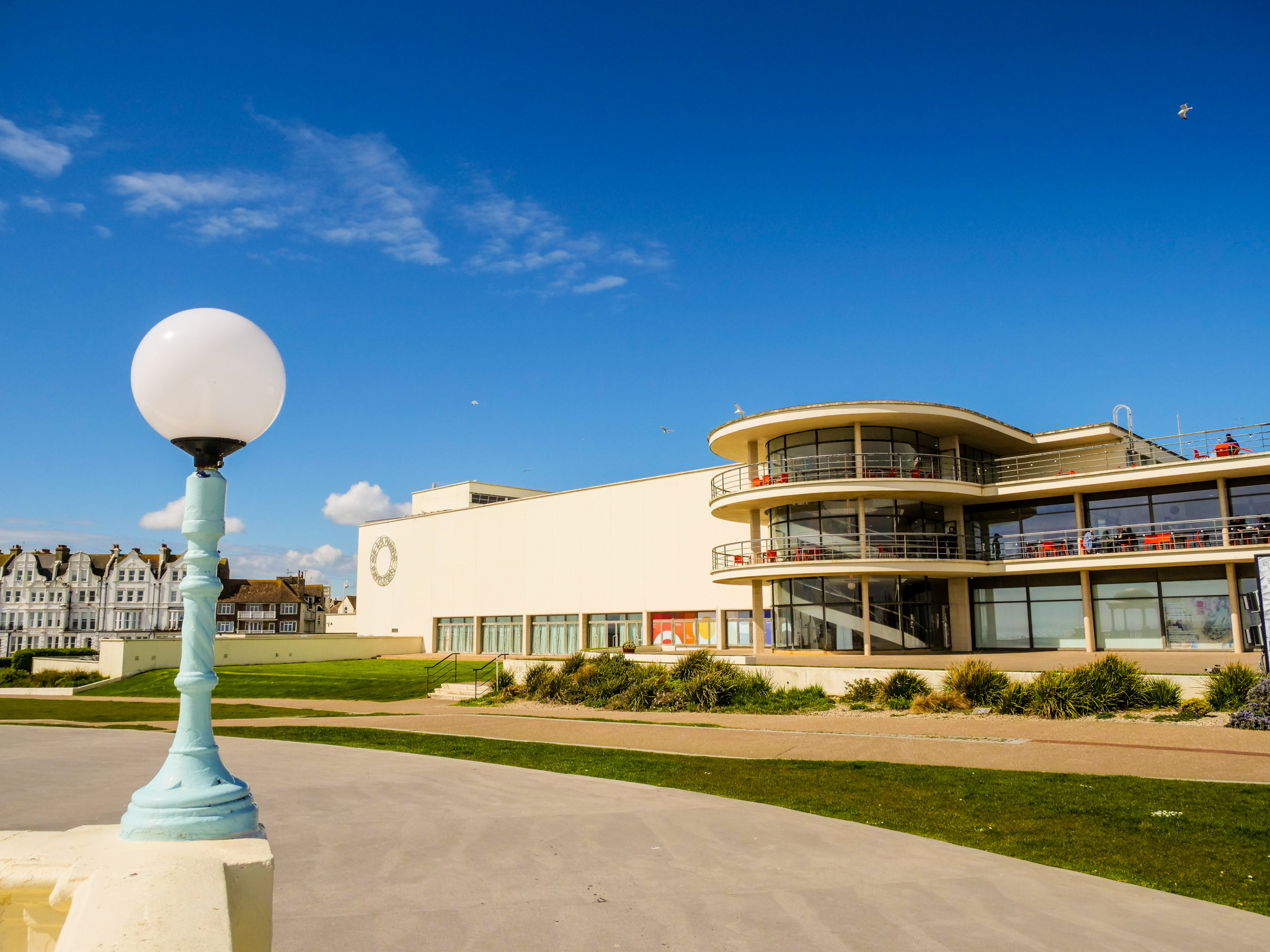
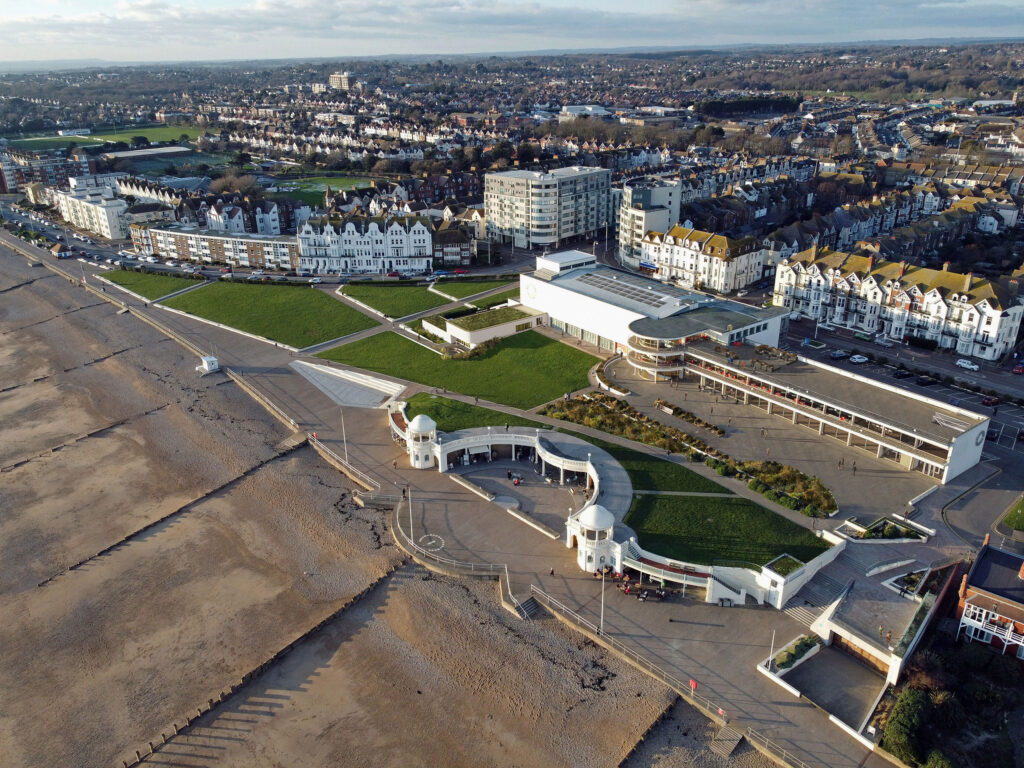
Today, the De La Warr Pavilion is a leading multi-arts centre. With two galleries, a 1,500-capacity auditorium, studio, café/bar with sea views, rooftop and outdoor spaces, it is the only building of its kind in the Southeast outside London and Brighton. The Pavilion welcomes over 350,000 visitors every year to experience art, performance, learning and skills programmes that inspire creativity and connect communities across one of the UK’s most deprived regions.
But the building faces severe challenges. Roof leaks, corroding windows and ageing systems threaten both physical heritage and our organisational mission. Community demand for spaces exceeds capacity and, without investment, the Pavilion’s cultural and community impact will significantly diminish.
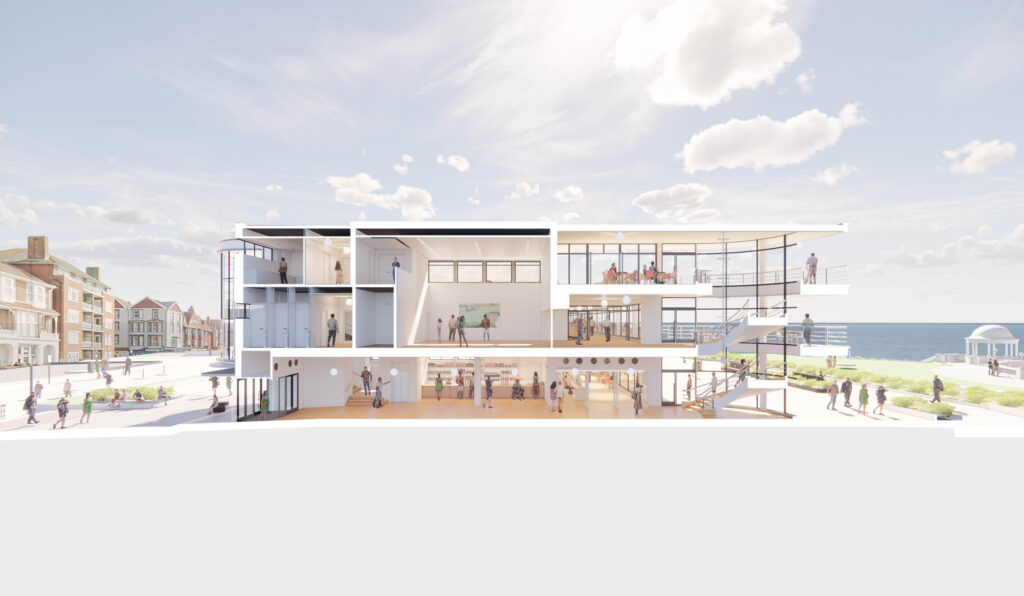
Designed by architects Haworth Tompkins and with input from local people, the redevelopment will create new learning and community spaces, refurbish our auditorium and galleries, improve accessibility, support organisational resilience and embed sustainability throughout the building.
This investment will safeguard our heritage and empower our community: widening access, increasing visitors, expanding creative learning, generating new local jobs and strengthening Bexhill’s economy.
Our centenary vision
We have a clear vision to deliver a three-phase masterplan within the next decade to safeguard the Pavilion and protect it as it approaches its centenary. The Pavilion will continue to be open, however throughout the project some parts of it will not be operational.
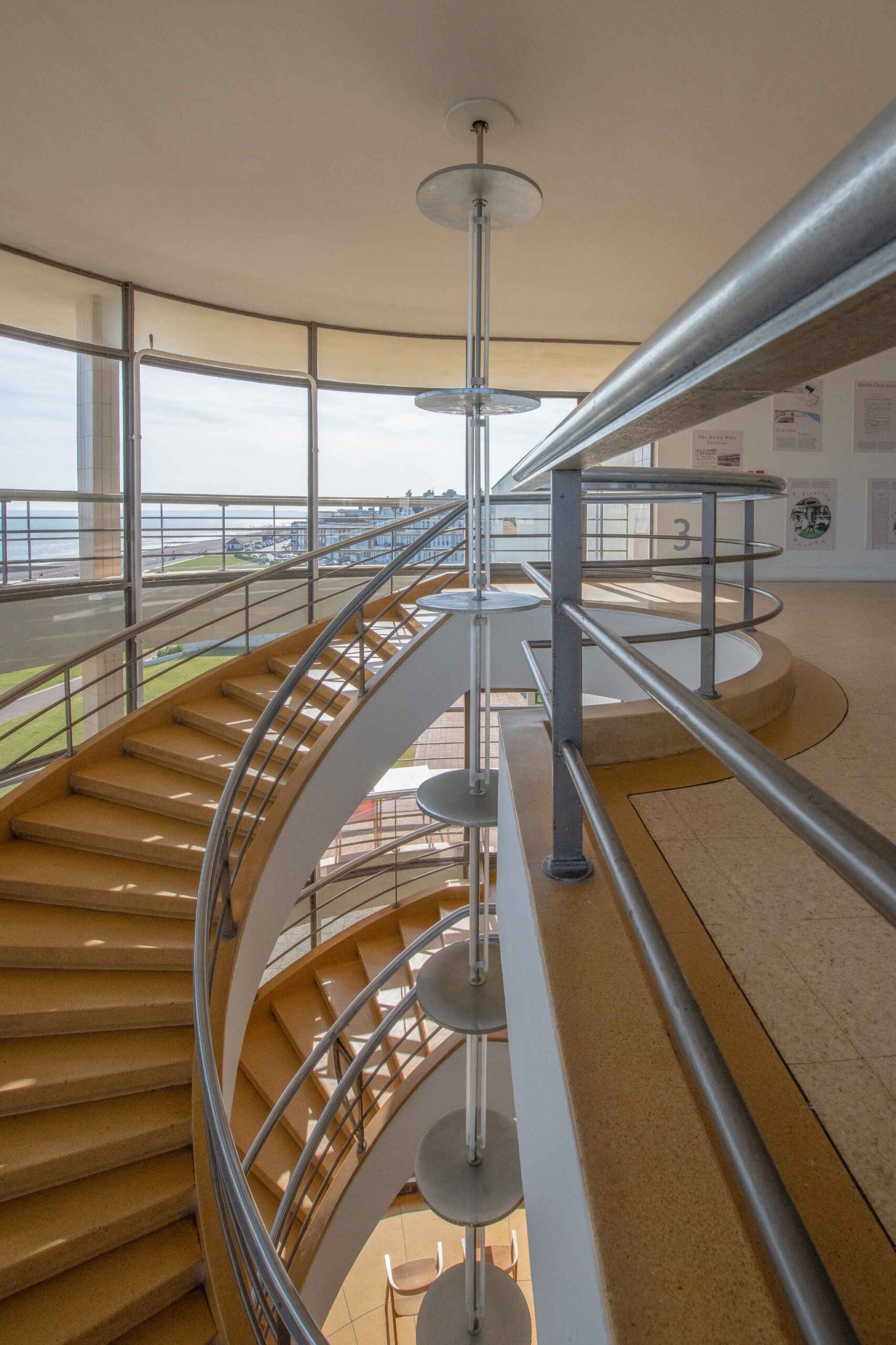
Some work begins this year such as repairing the auditorium piano lift after five years out of use, refurbishing the iconic staircases, installing solar panels, and replacing the auditorium seating with brand new permanent, comfortable seating.
Phase one focuses on refurbishing and reimagining the public and creative spaces – the auditorium, foyers, entrances and essential infrastructure – so it can once again fully serve its community. It will begin with essential works on the famous curved stair glazing, protecting it from further degradation and installation solar PVs on the repaired auditorium roof. This phase will improve accessibility, strengthen sustainability and reduce environmental impact. It will restore creative capacity and expand cultural opportunity, transforming the Pavilion into a more resilient and sustainable cultural asset. Crucially, it will protect free access to the building, sustaining free exhibitions, outreach activity and community-led programming.
Improvements include:
• New step-free north and south entrances with automated doors, providing – for the first time – step-free access from the seafront.
• A relocated and fire-safe public lift, a new backstage lift and fully step-free routes throughout public spaces.
• Widened foyers, created by the relocated lift, clearer circulation and improved wayfinding, reducing congestion.
• A Changing Places WC and expanded, inclusive toilets.
• Reinstating heritage finishes, including terrazzo, balustrades and original lighting.
• Repairing roofs, façades, windows, metalwork & rainwater systems, ending repeated water damage, thermal loss and emergency repairs.
• Refurbishing the auditorium with upgraded AV, adjustable raking and fly-tower rigging.
• Wheelchair-accessible seating in the auditorium balcony.
• Replacing all auditorium, stage, foyer and gallery lighting with LEDs.
• A new permanent ground-floor bar and café.
• Installing air-source heat pump infrastructure and photovoltaics.
• Repairing degraded steel-framed doors and windows and installing double-glazing where possible.
• Refurbished and repurposed flexible spaces.
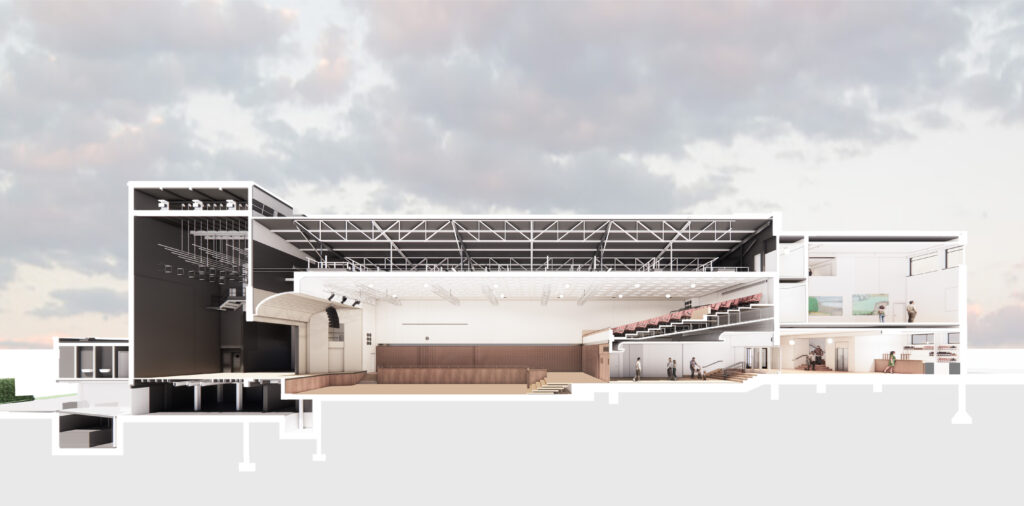
Phase two includes important improvements to the backstage area, including an artist’s lift to improve access to the stage and dressing rooms and new load-in systems for performances. A brand-new Learning Studio on the South West corner of the site will increase community and venue hire facilities with direct access to the lawns and seafront.
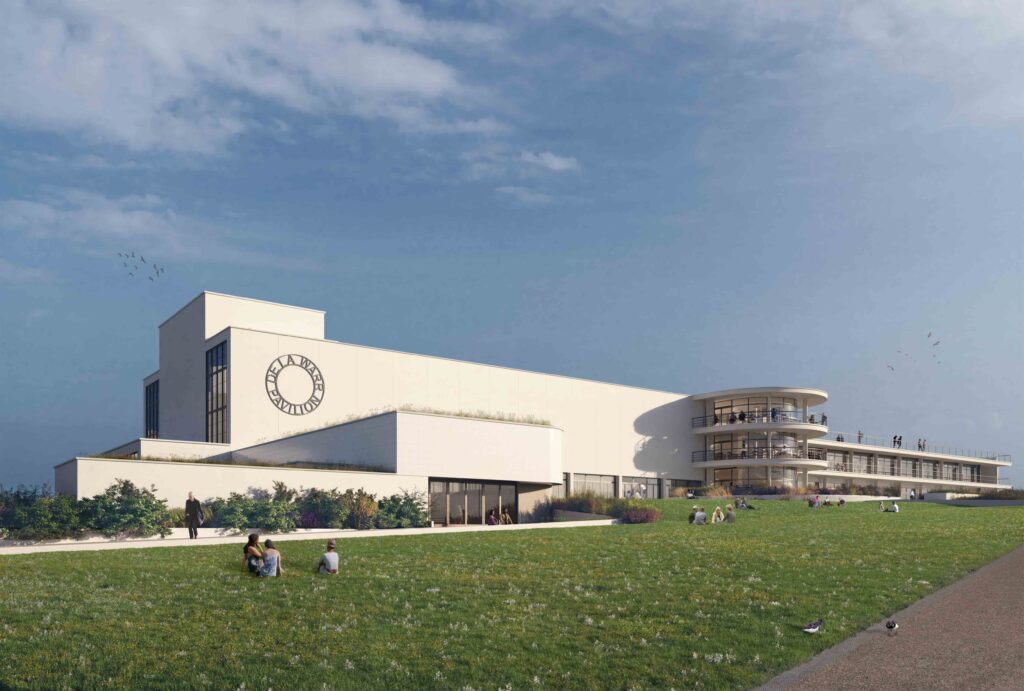
Phase three includes restoration and conservation of the East Wing, new learning spaces, refurbished galleries and accessible landscaping to the south.
Timeline
| Date | Information |
|---|---|
| 9th October 2025 | Rother District Council has unanimously granted planning permission and listed building consent for the De La Warr Pavilion Masterplan. |
| 12th December 2025 | De La Warr Pavilion and Rother District Council are awarded £7.6 million from The National Lottery Heritage Fund. |
| 23rd February 2026 | Tender is out for Rother District Council to appoint a Main Contractor to deliver auditorium, and foyer works at the De La Warr Pavilion. |
| May 2026 | Phase one begins with advanced works. |
| January 2027 | Phase one main works start. |
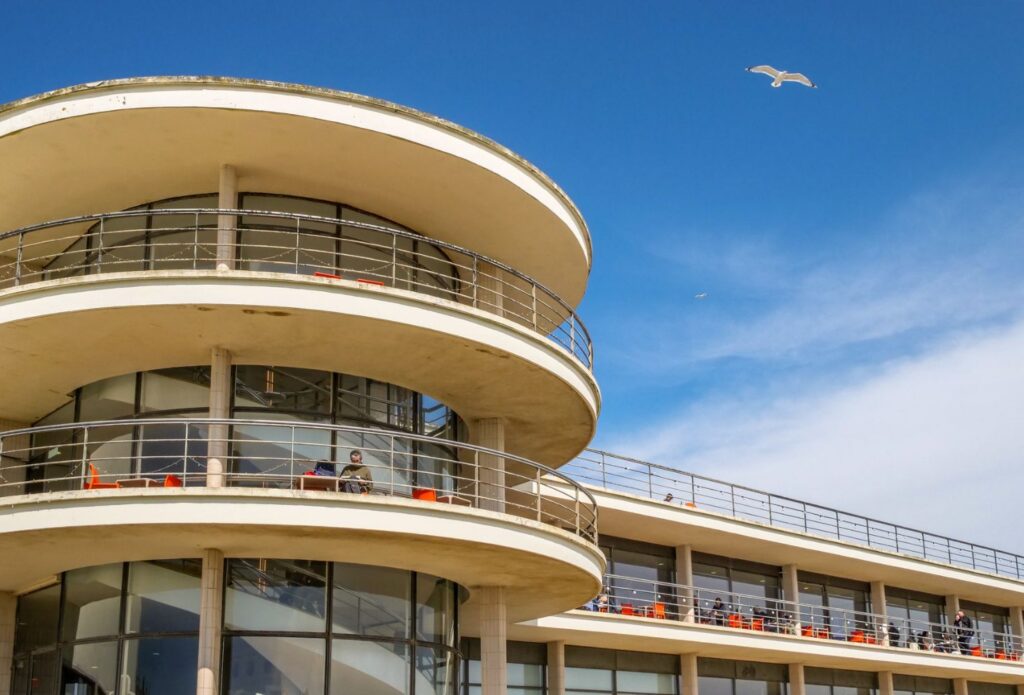
Specialist heritage contractor, Associated Steel Window Services (ASWS), will undertake a comprehensive refurbishment of the De La Warr Pavilion’s iconic staircase glazing, helping to preserve the Grade I listed modernist building. The works form part of the Pavilion’s major transformation project, An Icon For Everyone, delivered in partnership with Rother District Council and designed by Haworth Tompkins, the multi-award-winning architects recently shortlisted for the 2026 RIBA Stirling Prize, in consultation with local communities.
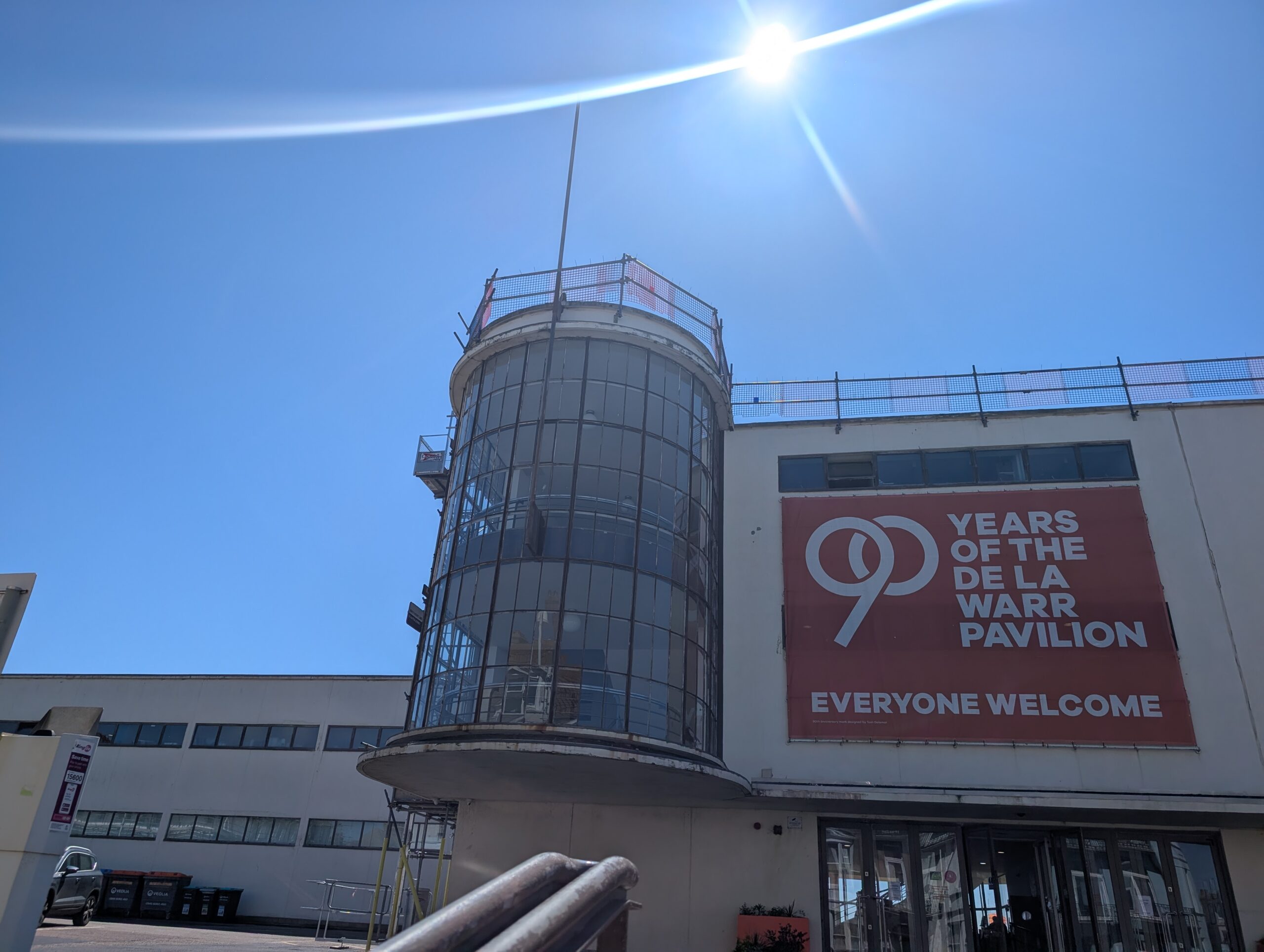
A distinctive feature of the De La Warr Pavilion is the north and south staircases, which are now in disrepair with cracks in the curved glass windows expanding with every storm, while many of the original metal-framed, single-glazed windows show signs of corrosion and cracking, resulting in poor levels of airtightness. Critical refurbishment works are now required to safeguard the Pavilion, preserve its architectural significance, and ensure its long-term resilience as it approaches its centenary.
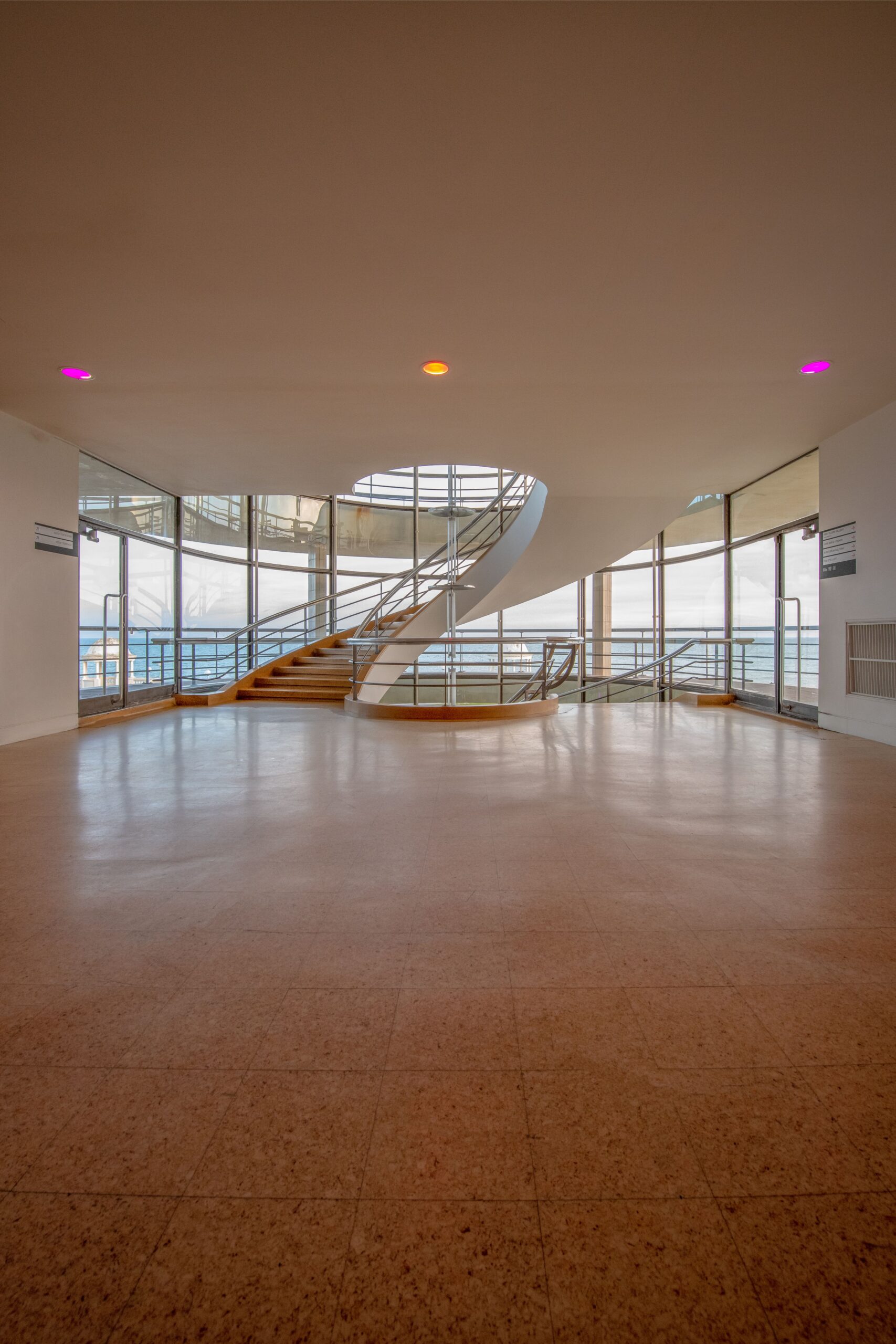
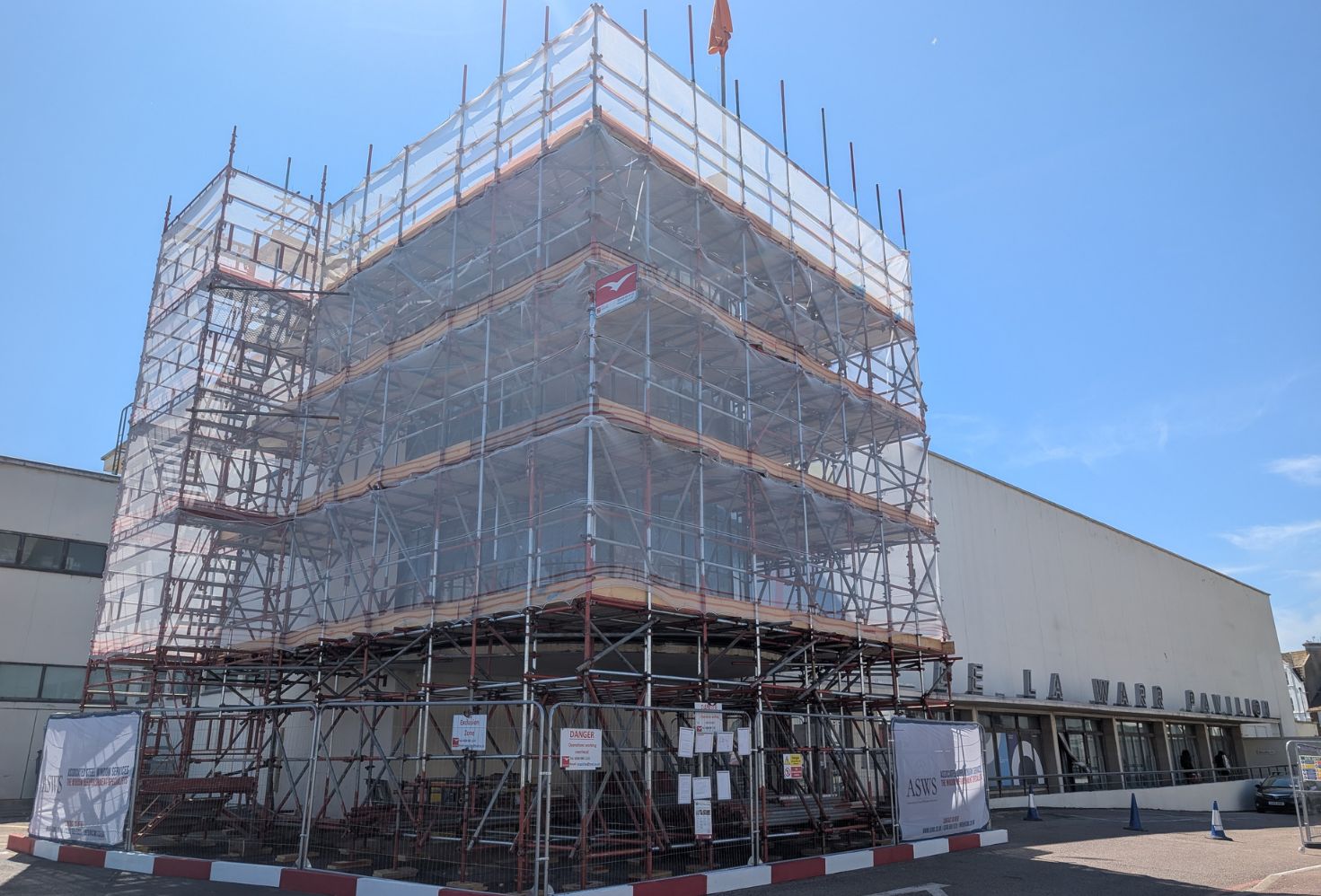
ASWS is undertaking the refurbishment of both bowed-plan staircase steel frame windows. The windows will be carefully removed and transported to ASWS’s Surrey workshop for repair and restoration alongside the installation of new steel ring beams, curved metal beading and new glazing. More than 60% of the workforce on this project is expected to come from the local area, creating valuable employment and heritage skills opportunities. TRAD Scaffolding has been appointed to provide site access, while a Hastings-based contractor is delivering internal partitioning and enabling works.
A phased programme of works has been carefully planned to ensure that the Pavilion remains open throughout this restoration, which is due to be completed in November 2026. While scaffolding will be in place and certain routes through the building will be temporarily adjusted, the Pavilion will continue to host a huge line-up of live music, comedy, exhibitions, alongside outdoor events on the terrace and free activities for the community.
This project is made possible through De La Warr Pavilion’s partnership with Rother District Council and the generous support of the UK Government, The National Lottery Heritage Fund, The Wolfson Foundation, Garfield Weston Foundation, The Chalk Cliff Trust, Foyle Foundation, and Suzy Eddie Izzard. This project is a key part of Transforming Heritage. Powering Community, a UK Government-funded partnership between Heart of Sidley, De La Warr Pavilion, and Rother District Council working together to create opportunities, inspiring pride of place and strengthening community life across Bexhill and Sidley.
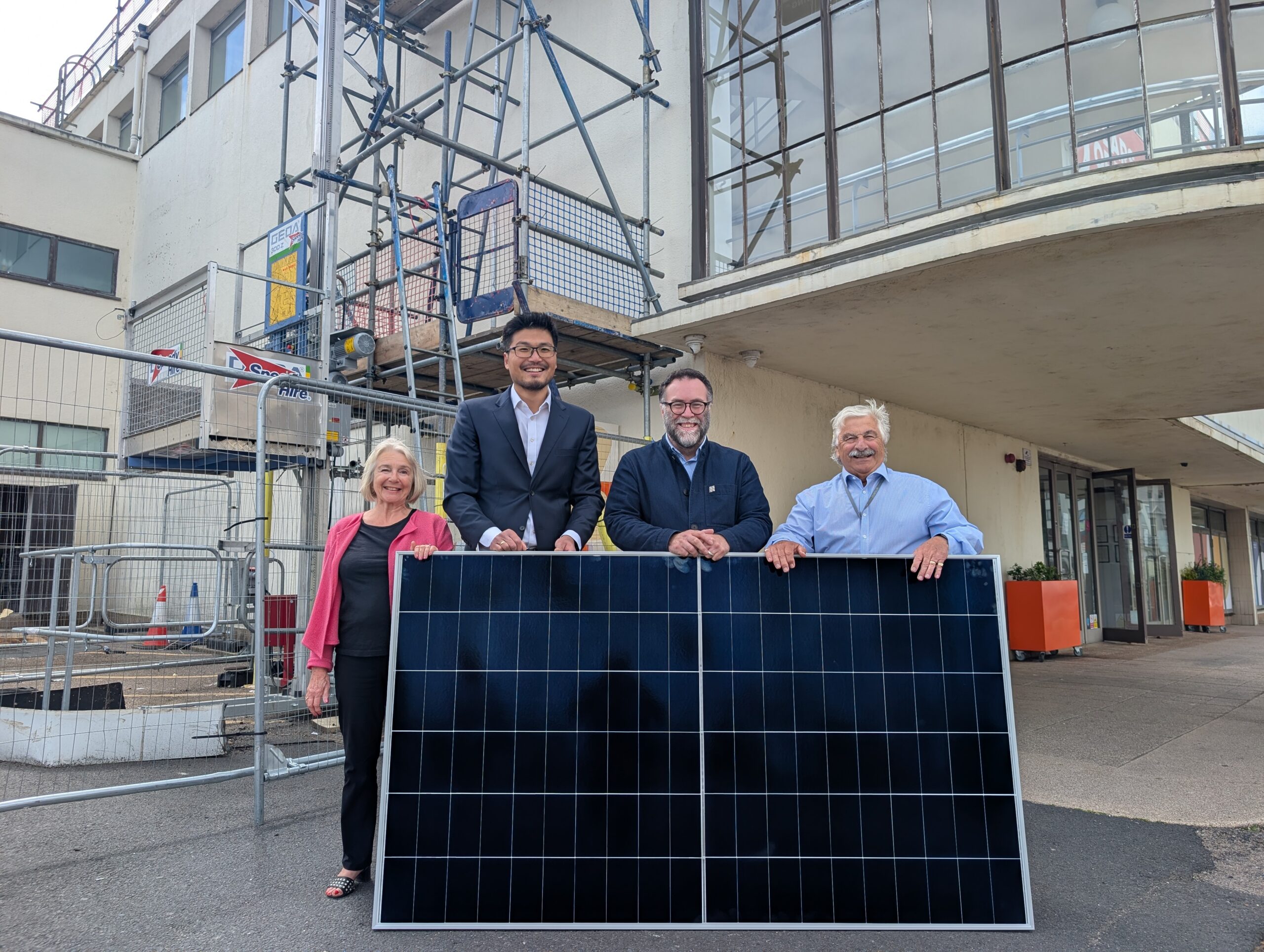
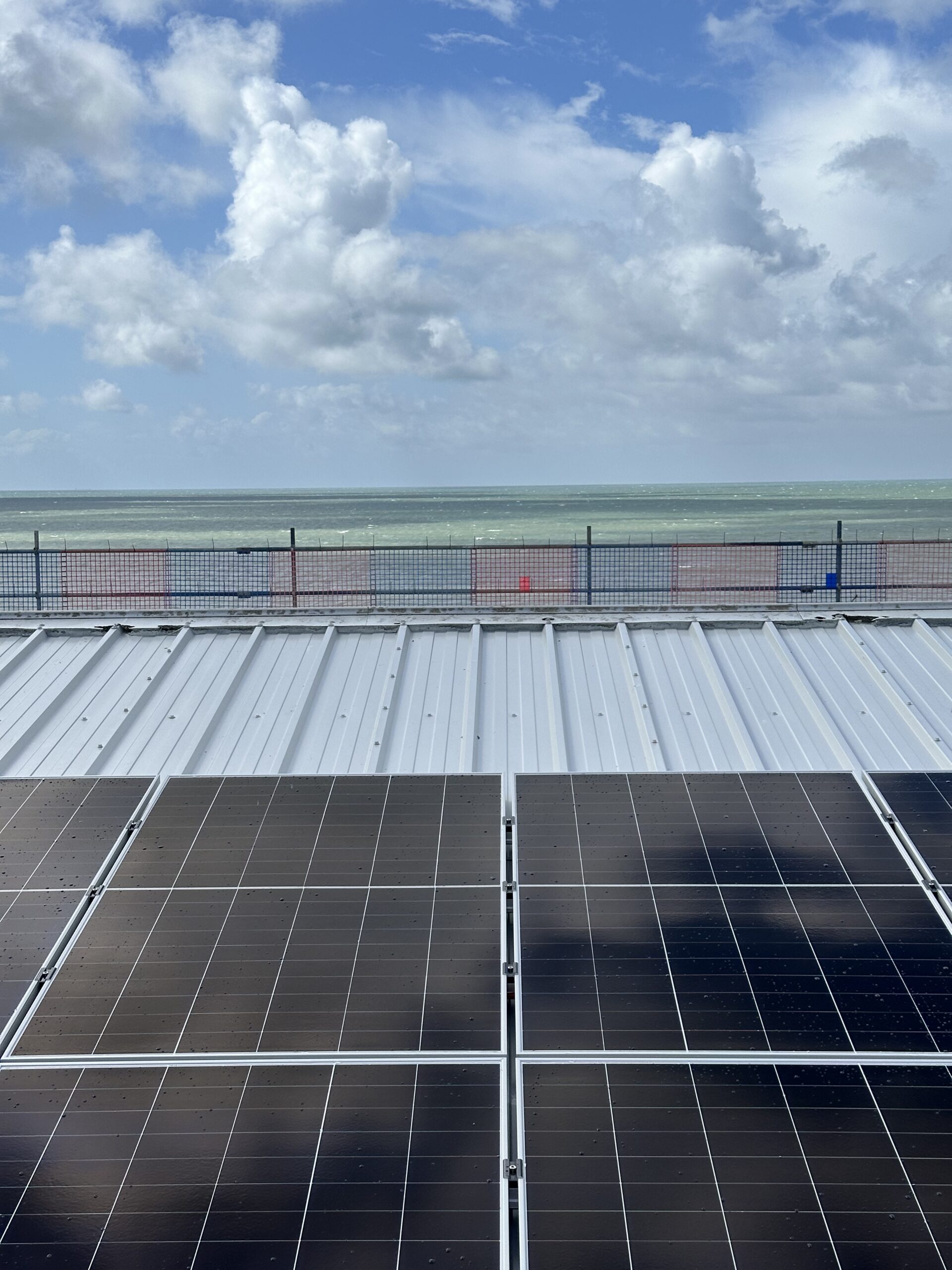
Commercial Solar Specialist, Absolar, has installed 144 lightweight solar panels (specifically chosen for the site considering its structural features) across the Auditorium roof of Bexhill – on – Sea’s Grade I listed De La Warr Pavilion on England’s south coast as part of its major transformation project, An Icon For Everyone in partnership with Rother District Council. Creating a system capacity of 77.7kWp meeting approximately 20% of the De La Warr Pavilion’s annual electricity demand
This is the first installation of this specific lightweight panel in the UK. At just 7.2kg/m2, these panels are among the lightest high – performance modules available commercially. This means the De La Warr Pavilion’s original steel roof structure, designed by structural engineer Felix Samuely, can carry the full array while preserving load – bearing capacity for future auditorium equipment and upgrades. Critically, the lightweight specification does not come at the cost of performance. The panels carry industry – leading efficiency ratings, generation output, and manufacturer warranties.
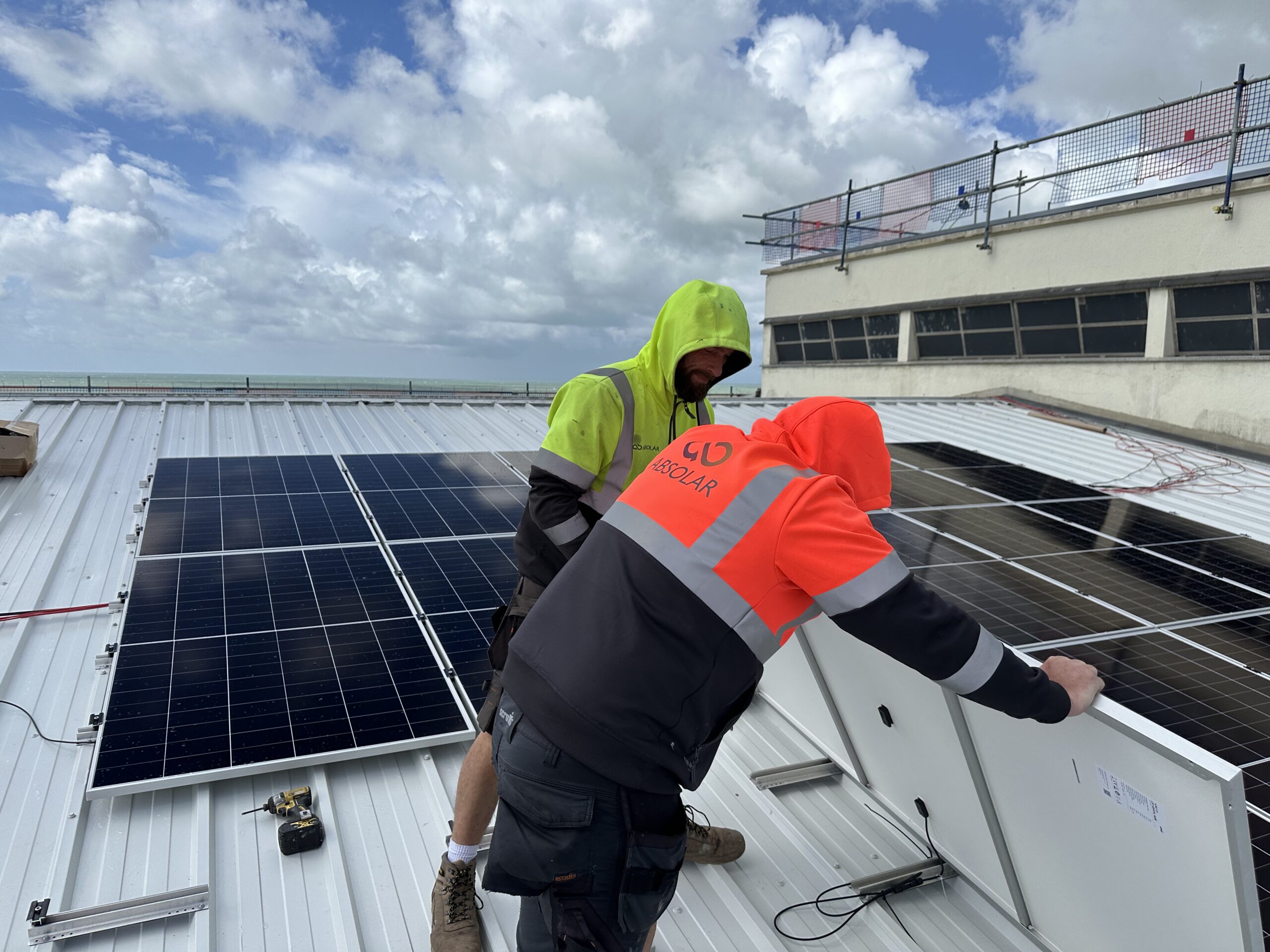
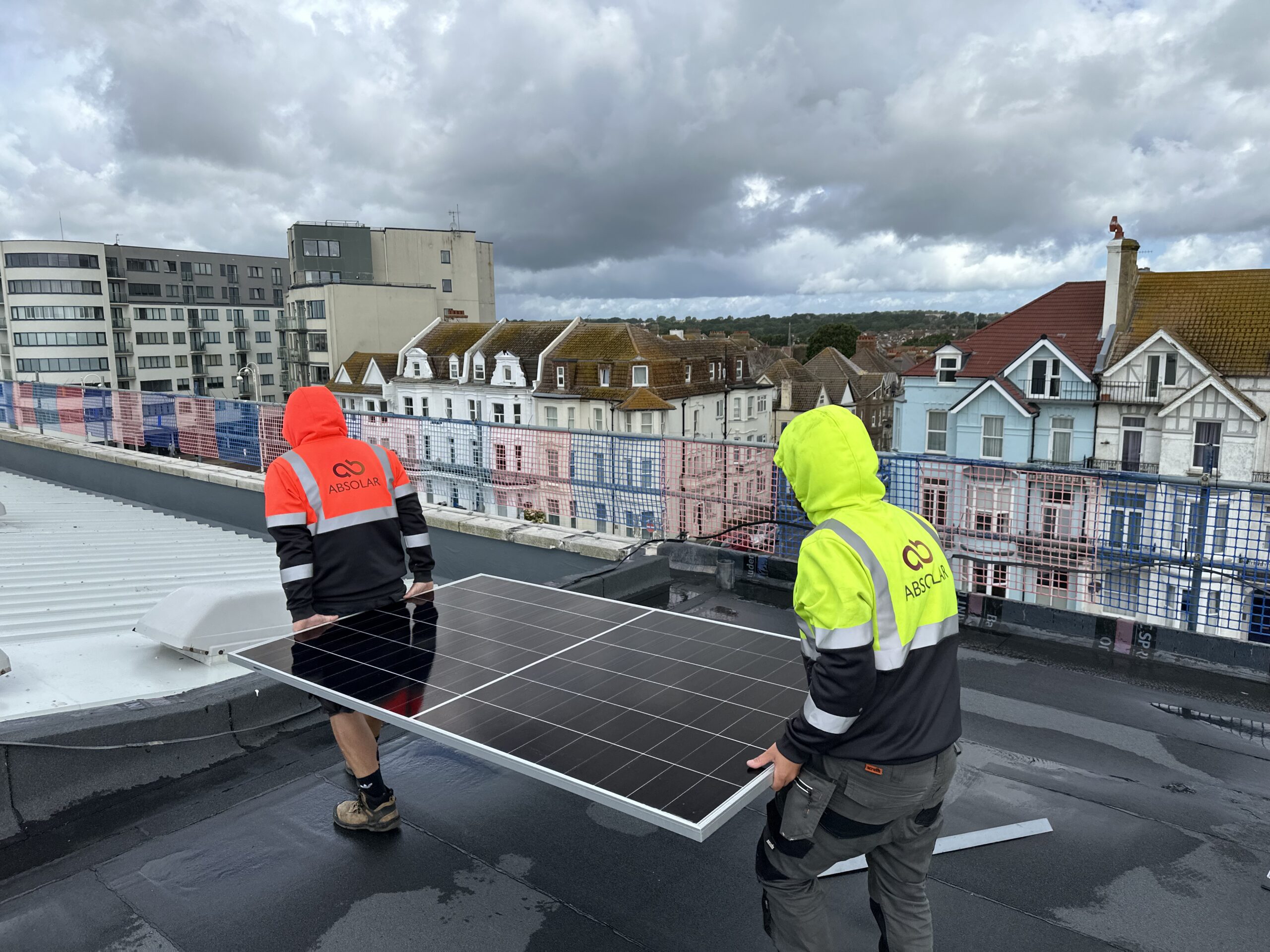
The solar panels are paired with the latest solar GoodWe inverters, selected for seamless integration with the De La Warr Pavilion’s existing electrical infrastructure and to provide compatibility for future battery storage, which would increase the building’s energy self – reliance further.
The impact this will have:
● 71,570 kWh generated per year , meeting approximately 20% of the De LaWarr Pavilion’s annual electricity demand
● 18 tonnes of CO2 saved annually, equivalent to the stage lighting for around 715 productions (based on a 50kW/hour west end lighting rig)
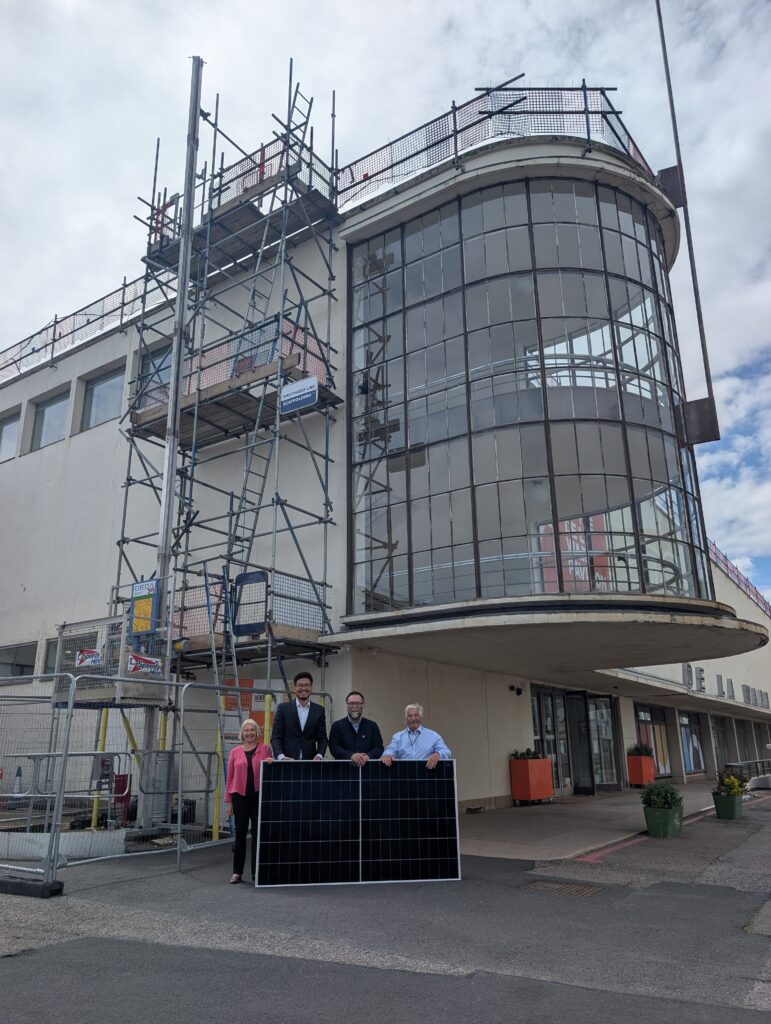
Stewart Drew, CEO and Director, De La Warr Pavilion says:
“As we celebrate the 90th year of the De La Warr Pavilion, I couldn’t be prouder to see these solar panels being installed. It’s a milestone moment, and one that reflects our ongoing dedication to environmental sustainability, strengthening the long – term resilience of the building and reducing its operational impact on the environment. These super – lightweight panels are the first of their kind to be installed in the UK and have been carefully chosen to be sympathetic to the existing roof, preserving the integrity of this Grade I listed modernist landmark.”
Cllr Kathryn Field, portfolio holder for environment at Rother District Council says:
“We are delighted that the solar panels are being installed at the De La Warr Pavilion.“This funding has enabled a major investment in environmental sustainability which will greatly reduce the Pavilion’s carbon footprint.“We’re currently promoting information on our website that provides advice on how we can all help in the face of a climate emergency. This solar panel installation is a great example of the commitment of all the partners to support protection of our local environment.
Dr Phil Wu, CEO of Absolar comments:
“It’s been a real honour to be part of this project as the De La Warr Pavilion is such a community asset, steeped in history and loved by the people of Bexhill. We were determined to find a solution that protects and preserves it for the next 90 years and beyond.“
As a listed building used daily by artists and the wider community, we approached this as much as an art project as an engineering one. Absolar chose modern solar panels, which are lightweight yet don’t compromise on performance. This means we fully respect the building’s original structure while securing its energy future.
“We’re proud to be part of its journey helping make it both structurally sound and environmentally ready for the next century.
The solar panels funded by Rother District Council’s Community Infrastructure Levy (CIL) Climate Emergency Bonus Fund and is part of De La Warr Pavilion’s transformation project, An Icon For Everyone that will redevelop this pioneering centre for the arts, creating new learning and community spaces, refurbish the auditorium and galleries, improve accessibility, support environmental sustainability and secure the Pavilion’s purpose as a creative and cultural home for all.
The first appointed contractors on site will be RTB Roofing, working to improve the Pavilion’s environmental sustainability by fixing the main foyer flat roof so that it is watertight and insulated, ensuring the inside of the building is warmer and more comfortable for visitors and ready for improvements to heating and airtightness that will come with the later works. Key preparatory works will also be carried out on the auditorium roof ahead of the installation of solar photovoltaics later in the year (solar panels paid for by Rother District Council’s Community Infrastructure Levy (CIL) funding).
Other work happening this year is the restoration of the iconic De La Warr Pavilion north and south staircase glazing, where specialist heritage glazing contractors will remove each pane of glass and carefully repair the metal frames before reglazing. This work will help improve the performance and long-term resilience of the building and reduce its operational environmental impact.
Planned works this Spring also include the repair of the auditorium piano lift, after being out-of-service for the last three years, contractors Centre Stage Engineering will restore this essential piece of equipment meaning our technical team can load in band equipment from the west stage doors avoiding the need to load through the delicate glass doors at the front of the building. Staging and seating can now be stored beneath the stage and accessed easily, reducing heavy lifting and turnaround times and allowing the auditorium to better support multiple users.
De La Warr Pavilion auditorium audiences will be happy to hear that new permanent seating is currently being crafted by Audience Systems, a leading UK designer, manufacturer and installer of specialist seating. With fabric now in production by Bute Fabrics (est. 1947) on the Isle of Bute, home of our sister Pavilion in Rothesay. Supporters can donate through the Your Seat In History campaign to help fund the building project, have their name engraved on the chair of plaques in the auditorium and become part of the Pavilion’s story.
All areas of the Pavilion will remain open throughout 2026. Some scaffolding will be in place and certain routes through the building will be temporarily adjusted. The addition of the DLWP 90th birthday Summer Programme on the south terrace will ensure that Summer 2026 is a time full of activity for the Pavilion.
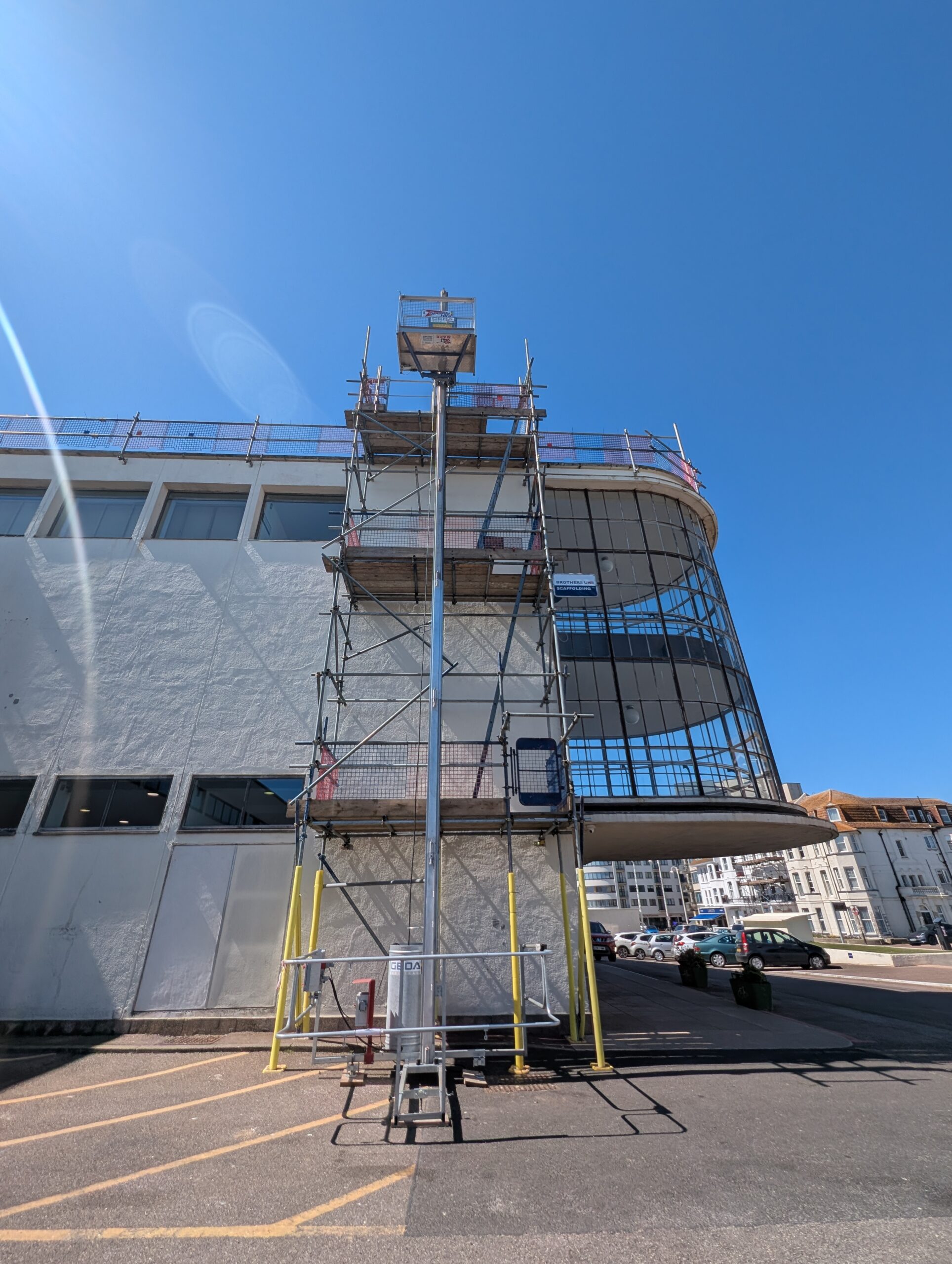
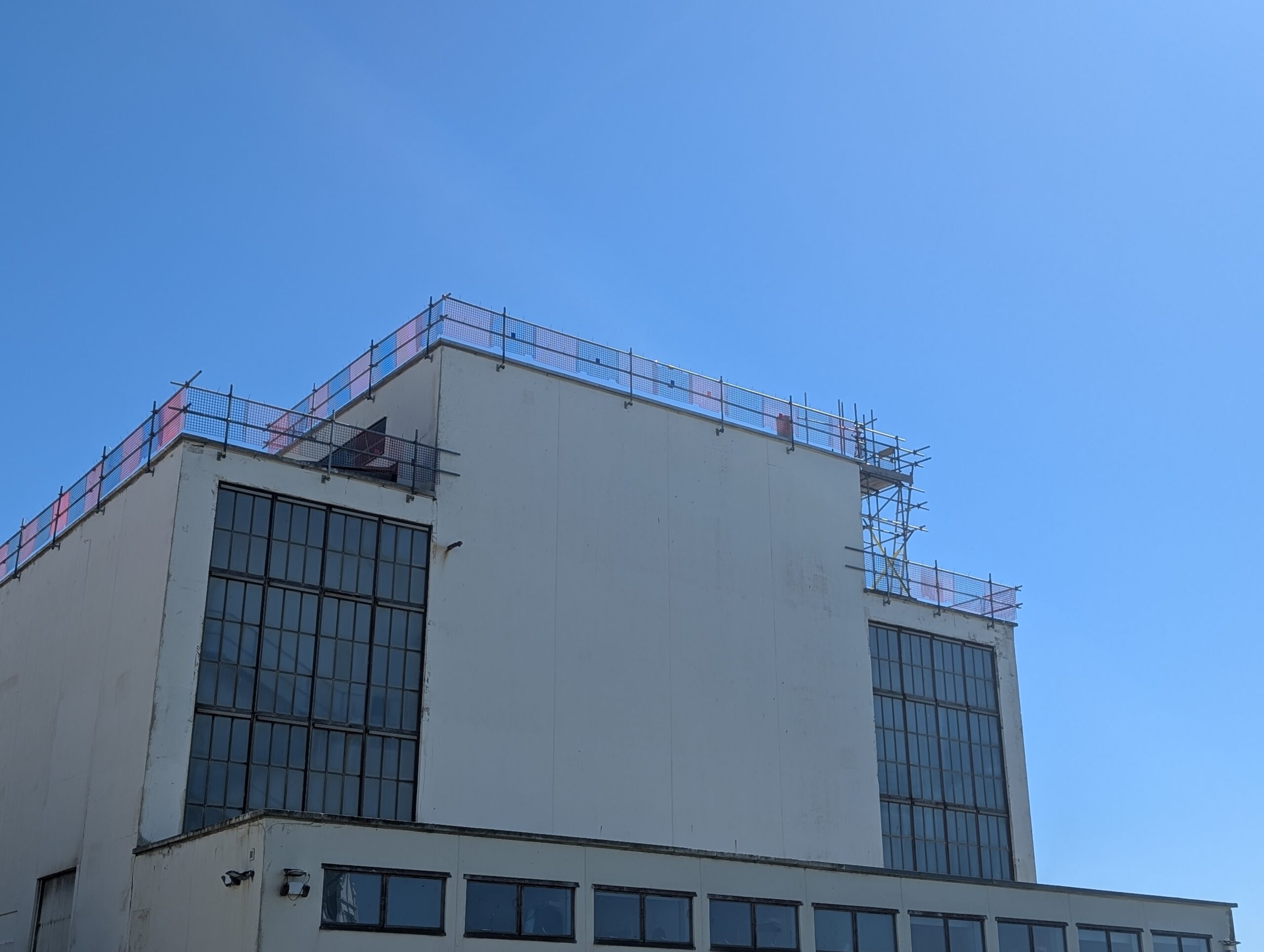
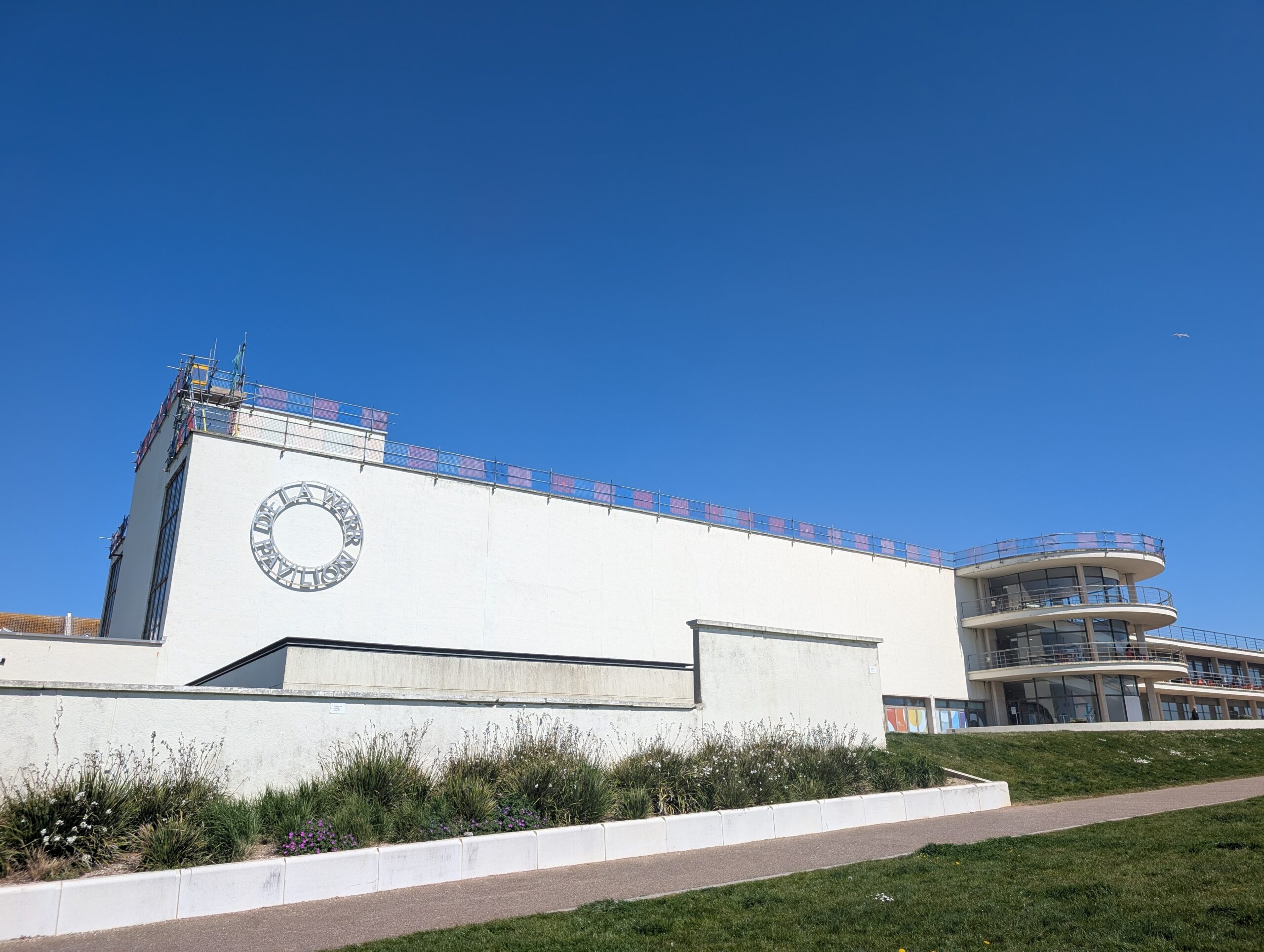
Rother District Council are seeking to appoint a suitable qualified and experienced Main Contractor to deliver auditorium and foyer works at the iconic and Grade I listed De La Warr Pavilion as part of the transformation project, An Icon For Everyone.
This contract intends to undertake a comprehensive set of refurbishment activities to renovate the original auditorium, redesign the foyer spaces and improve visitor experience and accessibility, support organisational resilience and embed sustainability throughout the building from October 2026 to February 2028. The Pavilion is going to remain live and operational throughout this period in a limited capacity.
The appointed/shortlisted contractors need to meet stringent requirements and will be the best suited to carry out this complex conservation project. We have contacted suitable scale local businesses to ensure local engagement and the procurement process is open to those that meet required criteria through the council’s procurement website. We are ensuring that all tenderers can provide compelling evidence of their contribution to the local area through direct employment, sub-contractor relationships and supply chain. This means that money we spend with contractors through the project will be re-invested in Bexhill, Rother & East Sussex through jobs and trade.
For more information about this contract tender please visit: www.find-tender.service.gov.uk/Notice/018822-2026 and for more information about An Icon For Everyone please visit: www.dlwp.com/our-capital-project.
Our capital project is led by Haworth Tompkins, a Stirling Prize-winning architectural studio with an international reputation for intelligent, purposeful design. Their projects have won over 180 major design awards, including the RIBA Stirling Prize in 2014, and they were named AJ100 Practice of the Year in both 2020 and 2022. The practice has over 30 years’ experience of working with iconic cultural buildings and collaborating with socially driven organisations who share their belief in creating spaces for people and communities.
Their relevant capital projects include the Theatre Royal Drury Lane (2021), a major restoration of the grade I listed theatre; Battersea Arts Centre (2018) the rebirth of a town hall for community and theatre use; The National Theatre (2015) regeneration of Dennis Lasdun’s modernist masterpiece, and The Chichester Festival Theatre (2014) renewal and expansion of Powell’s and Moya’s landmark Modernist producing theatre.
Heritage
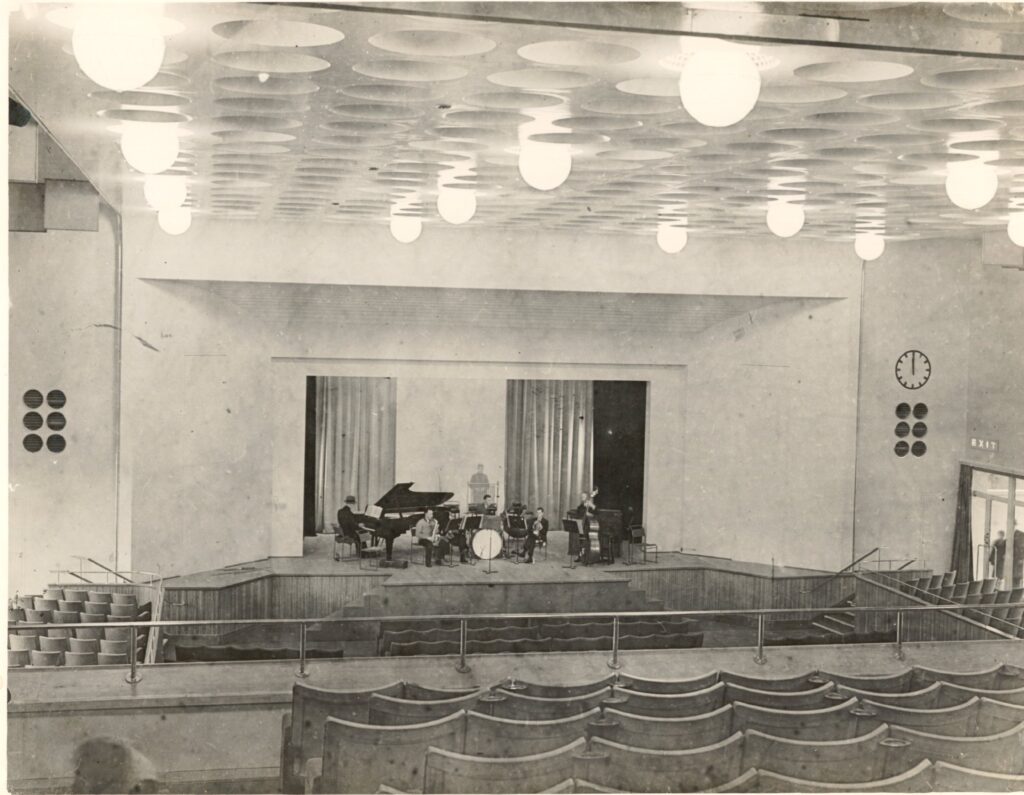
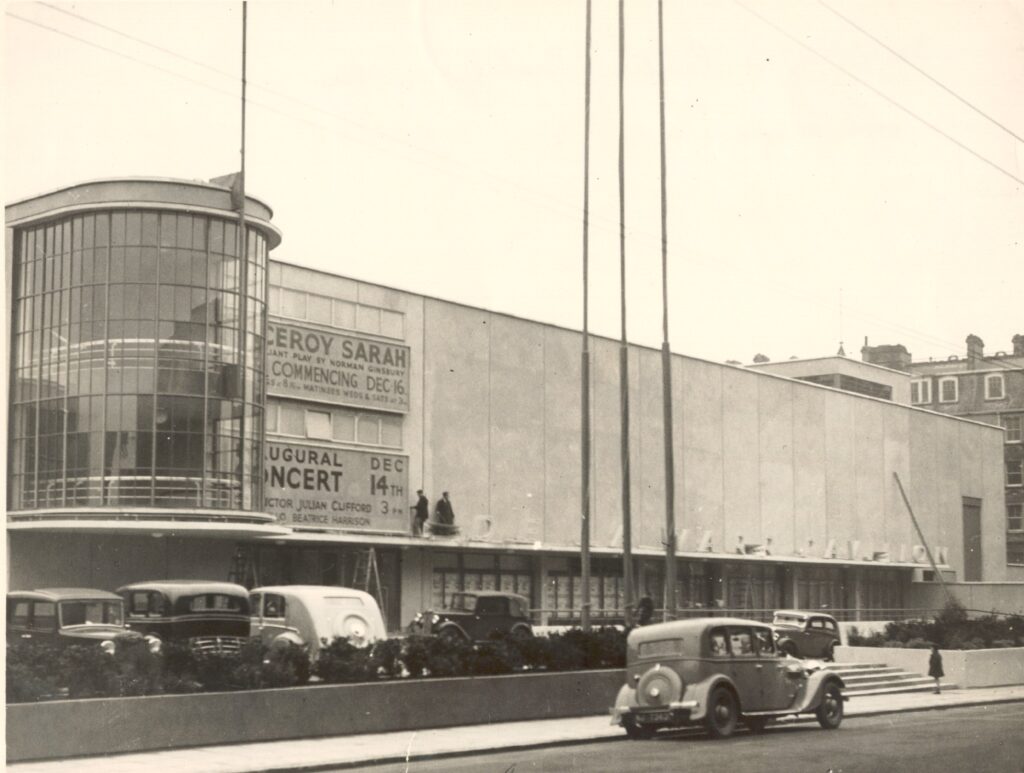
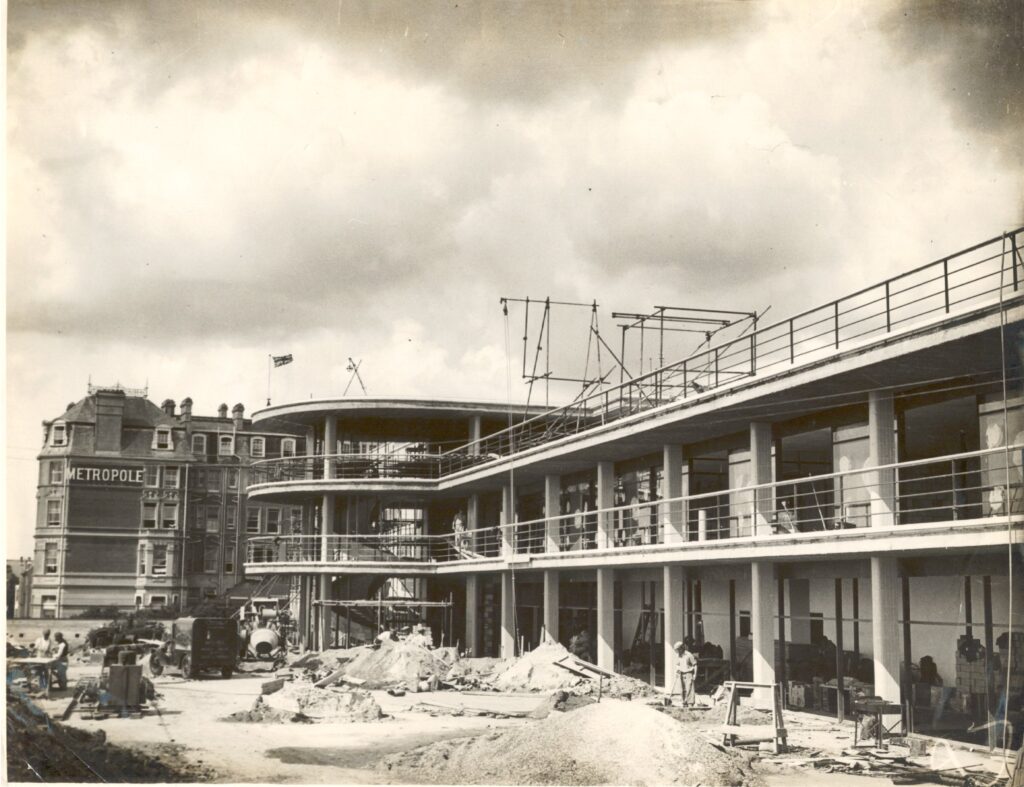
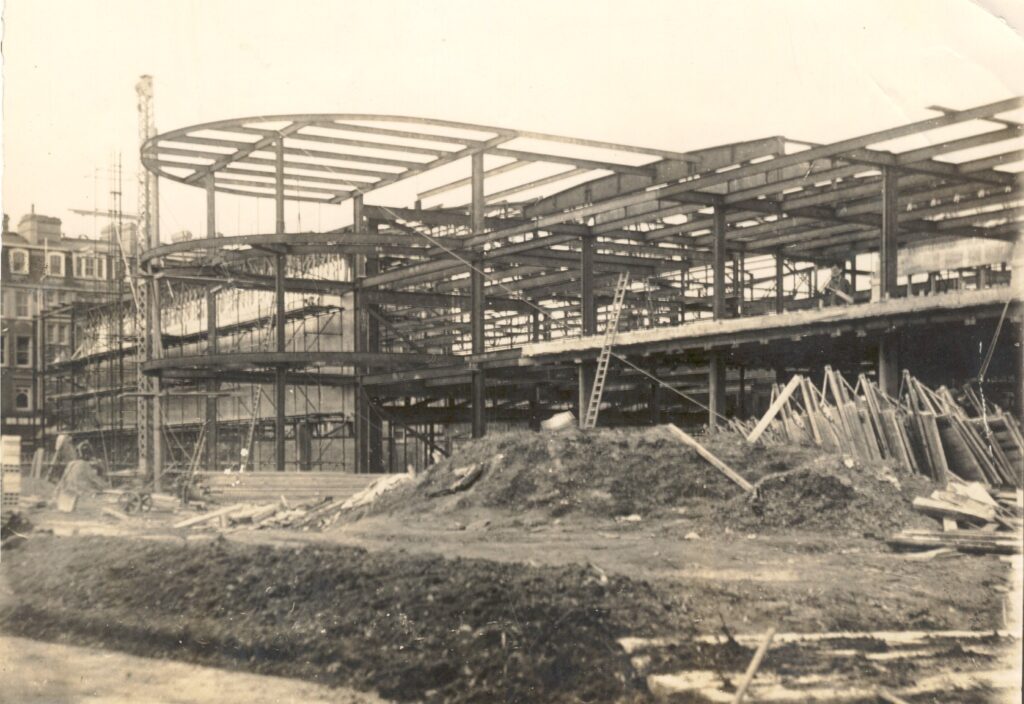
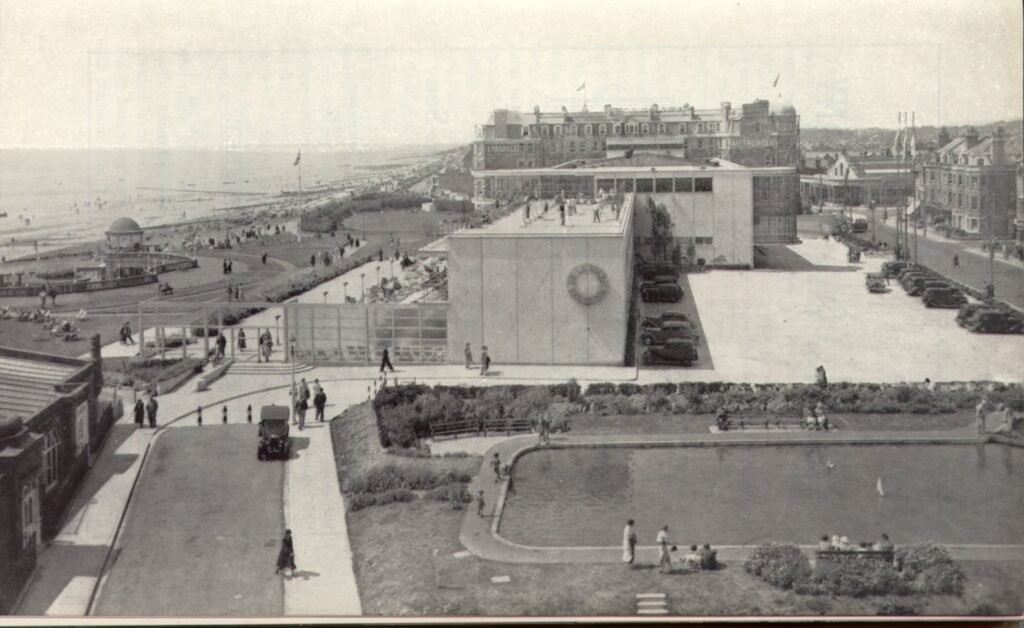
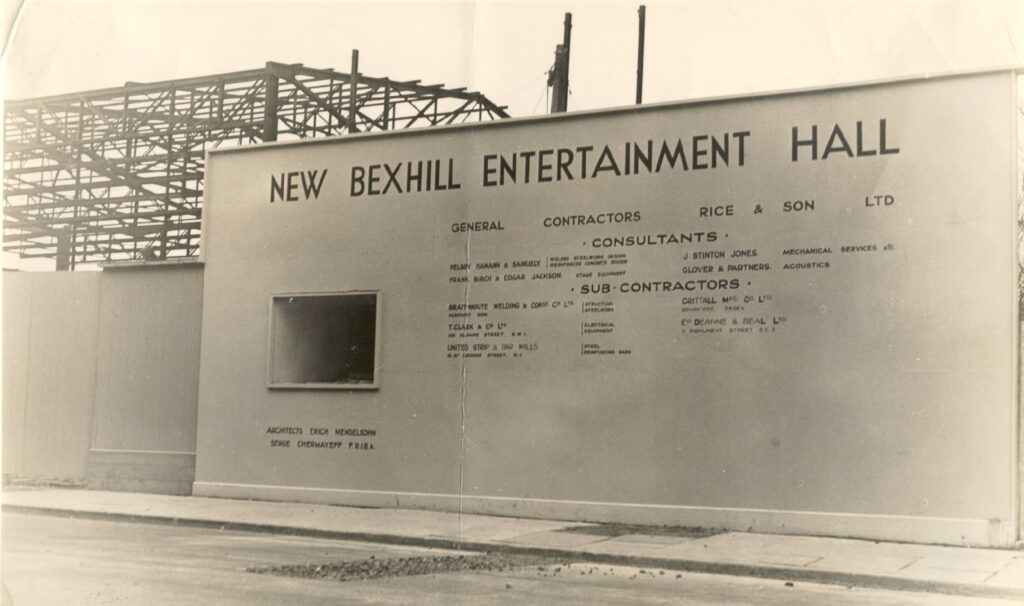
The Pavilion was designed by Erich Mendelsohn and Serge Chermayeff, with engineering by Felix Samuely, and was named after the 9th Earl De La Warr, who was the driving force in its creation. Below are some images of the De La Warr Pavilion from 1935, courtesy of Bexhill Museum.